NETRF 2026 Research Symposium

Keynote Address

Through the Looking Glass: Twenty Years of Progress in Neuroendocrine Cancer and the Next Era of Discovery

Chrissie Thirlwell, MBBS, PhD, FRCP, SFHEA, University of Bristol
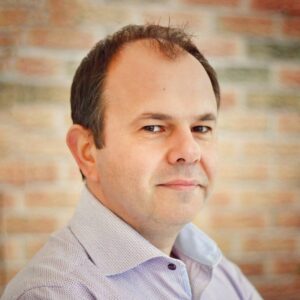
Dr. Chrissie Thirlwell

Chrissie Thirlwell, MBBS, PhD, FRCP, SFHEA, is an internationally recognized leader in neuroendocrine tumor research spanning basic science, translational research and clinical trials. Clinically she works as a Medical Oncologist and is a Professor of Cancer Genomics and Head of the University of Bristol Medical School.

Her research program has secured over $48 million in funding and her work has been published in Nature Genetics, Nature Medicine, Nature Methods, JAMA Oncology and Cancer Discovery and Lancet Oncology. Her neuroendocrine tumor research has identified distinct molecular subgroups and epigenetic biomarkers that are reshaping classification and leading towards personalized treatment, this is supported by collaborations across the Broad Institute and Harvard, UCSF, Bern,Verona, Madrid, Uppsala, UCL and Cambridge Universities.

In her keynote presentation Chrissie will share some key advances in neuroendocrine cancer research over her career to date, reflect on this incredible community of researchers, patients and supporters that she has had the privilege of working with and will then look to the future, where she hopes we can offer the most effective personalized therapies and ultimately prevent this cancer from developing.
Challenge Address

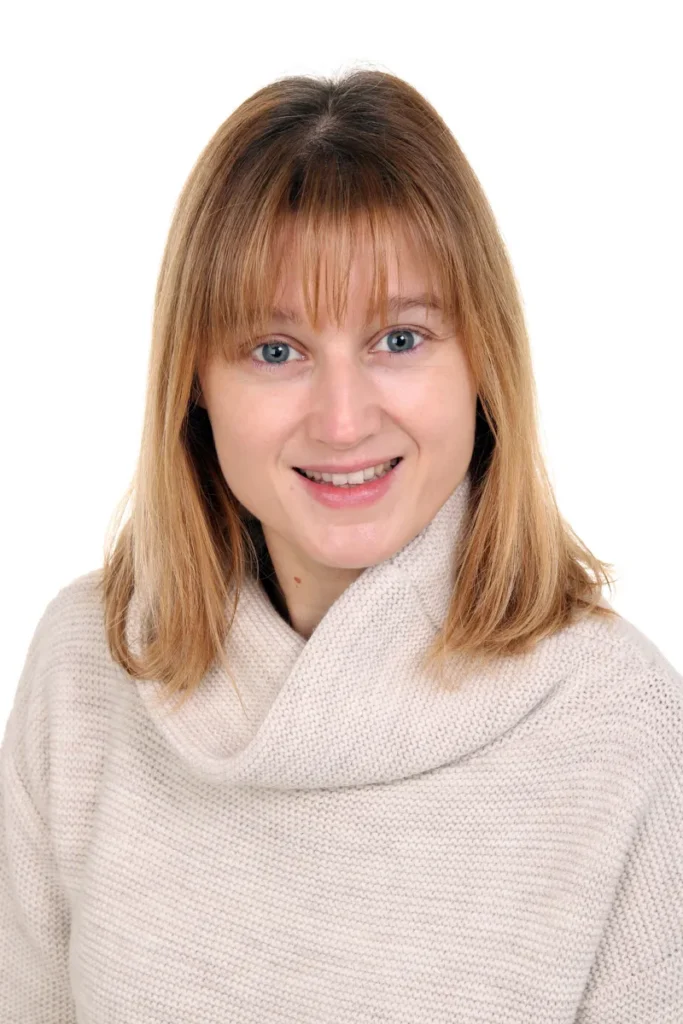
Lynnette Fernandez-Cuesta, PhD, International Agency for Research on Cancer (IARC-WHO)
Lynnette Fernandez-Cuesta, PhD

Lynnette Fernandez-Cuesta, PhD has more than 15 years of experience in the field of thoracic cancer functional genomics. She currently leads the Computational Cancer Genomics Team at IARC–WHO. As a Principal Investigator, she has made major advances in the study of thoracic tumors through the lungNENomics and MESOMICS projects. Among them is the discovery of supra-carcinoids, a finding that has significantly advanced the understanding of thoracic neuroendocrine tumors.

Lynnette will discuss the major challenges and emerging opportunities for implementing the morpho-molecular classification proposed in her recent publication in Molecular Cancer into routine clinical practice. Her presentation will highlight the practical considerations for integrating this classification into diagnostic workflows, its potential impact on patient stratification and personalized treatment, and the steps needed to facilitate its adoption in clinical settings.
Symposium Agenda

Presenting Sponsor: Exelixis
All times listed are in Eastern Time

Monday, November 16:

5:00-6:00 PM – Registration
Location:  Fenway Foyer, Hotel Commonwealth

6:00-8:00 PM – Welcome Reception & Poster Session
Location:  Esplanade Room, Hotel Commonwealth
Sponsored by Compass Therapeutics


Tuesday, November 17:

Location: Hotel Commonwealth

8:00-9:00 AM – Breakfast & Registration
Location: Fenway Foyer

8:00-8:50 AM – Early Career Breakfast (registration required)
Location: Kenmore Room

9:00-9:05 AM – Welcome
Elyse Gellerman, MHS, CEO

9:05-9:15 AM – Welcome, Meeting Logistics, and Poster Awardee Announcement
Anna Greene, PhD, CSO; Mandy Westland, PhD, Research Program Coordinator

9:15-9:50 AM – Keynote Address
Through the Looking Glass: Twenty Years of Progress in Neuroendocrine Cancer and the Next Era of Discovery
Chrissie Thirlwell, MBBS, PhD

9:50-10:05 AM – Patient Voice
Jackie Dong

SESSION 1: Origins, Cell States & Tumor Evolution

Fenway Ballroom | Session Chairs: TBA

Kirsten Kübler

Christin Kuo
Christin Kuo
Elsa Hadj Bachir

Ruben Dries

Fabien Lamaze

Taisiia Sazonova

Nancy Joseph


Presentations

10:05-10:20 AM – Diverse Cellular Origins and Lineage States in Pancreatic Neuroendocrine Neoplasms
Kirsten Kübler, MD, PhD

10:20-10:35 AM – Human pulmonary neuroendocrine (NE) cell diversity and the diversity of pulmonary carcinoids in the bronchial airways.
Christin Kuo, MD

10:35-10:50 AM – Delineate human intestinal neuroendocrine tumor cell states in relation to normal enteroendocrine cell ontogeny
Elsa Hadj Bachir, PhD

10:50-11:00 AM – Discussion (10 min)

11:00-11:20 AM – Coffee & Networking Break

11:20-11:30 AM – Spatial multimodal profiling unravels lineage plasticity in non-functional pancreatic neuroendocrine tumors
Ruben Dries, PhD

11:30-11:40 AM – Genomic Characterization of Lesion Progression in Diffuse Idiopathic Pulmonary Neuroendocrine Cell Hyperplasia (DIPNECH)
Fabien Lamaze, PhD

11:40-11:50 AM – Establishing Drosophila and mammalian models to assess the effects of endocrine tumour-associated MEN1 variants on Menin-HDAC1 complex formation
Taisiia Sazonova, MD, MSc

11:50-12:00 PM – The genetic evolution of low to high-grade progression in pancreatic neuroendocrine tumors
Nancy Joseph, MD, PhD

12:00-12:10 PM – Discussion (10 min)

12:10-12:20 PM – Group Photo – All attendees and participants

12:20-1:30 PM – Lunch

12:20-1:30 PM – Early Career Informal Lunch

SESSION 2: Neuroendocrine Carcinomas: Biology, Models & Therapeutic Vulnerabilities

Fenway Ballroom | Session Chairs: TBA

Chrissie Thirlwell

Chrissie Thirlwell, MBBS, PhD

Talya Dayton, PhD

Presentations

1:30-1:45 PM – Featured Overview: Neuroendocrine Carcinoma  — State of the Field
Trudy Oliver, PhD

1:45-2:00 PM – YAP activation disrupts MCPyV-driven tumor maintenance and reveals mTORC1 survival dependency in Merkel cell carcinoma
Chiara Mazziotta, PhD

2:00-2:10 PM – Targeting heterogeneous populations in high-grade neuroendocrine carcinomas
C. Allison Stewart, PhD

2:10-2:20 PM – Extrapulmonary Neuroendocrine Carcinoma of the Breast: Divergent Survival Outcomes and Genomic Heterogeneity Across Receptor Subtypes
Elyse Lopez, MD

2:20-2:35 PM – Discussion (15 min)

2:35-3:00 PM – Coffee & Networking Break

SESSION 3: Tumor Ecosystems, Signaling & Resistance

Fenway Ballroom | Session Chairs: TBA

Dawn Quelle

Dawn Quelle, PhD

Mauro Cives

Mauro Cives, MD

Presentations

3:00-3:15 PM – VEGF-C/VEGFR3 Signaling Programs an Endothelial Niche to Sustain PanNET Liver Metastasis and Antiangiogenic Resistance
Minah Kim, PhD

3:15-3:30 PM – Integrated spatial and transcriptomic profiling identifies remodeled stromal ecosystems in ALT-positive pancreatic neuroendocrine tumors
Christopher Heaphy, PhD

3:30-3:45 PM – Changes in the Tumor Microenvironment of Well-Differentiated Metastatic Neuroendocrine Tumors might mediate resistance in patients treated with 177Lu-DOTATATE
Rahil Abbu, MSc

3:45-3:55 PM – Discussion (10 min)

3:55-4:05 PM – Adenosine Pathway Activation and Immune Crosstalk in Pseudohypoxic VHL-Related Pancreatic Neuroendocrine Tumors
Amit Tirosh, MD

4:05-4:15 PM – Loss of nuclear Menin alters lipid homeostasis in pancreatic neuroendocrine tumor cells
Suzann Duan, PhD

4:15-4:25 PM – High Mobility Group Box 3 (HMGB3) drives tumorigenesis in aggressive neuroendocrine neoplasms by facilitating DNA damage repair and resistance to genotoxic stress
Nilakshi Kulathunga, PhD

4:25-4:35 PM – Discussion (10 min)

4:35-4:45 PM – Travel Award Presentations
Susie Harrington, CDO
Travel Award support: Camurus · Compass Therapeutics · ITM · Neuroendocrine Cancer New Zealand · Pheo Para Alliance · RayzeBio (BMS) · Rezolute · Jim Rodin

4:45-6:00 PM – Extended Poster Viewing & Happy Hour
Location: Esplanade Room
Research connections and informal conversation

Wednesday, November 18:

Location: Hotel Commonwealth

8:00-9:00 AM – Breakfast & Registration

9:00-9:05 AM – Welcome
Anna Greene, PhD

9:05-9:20 AM – Patient Voice
Lori Dolnick

9:20-9:45 AM – Challenge Address: Moving Morpho-Molecular Classification into Clinical Practice
Lynnette Fernandez-Cuesta, PhD

9:45-10:00 AM – Discussion

10:00-10:45 AM – Panel Discussion: From Discovery to Impact: What Will It Take to Move NEN Research Forward?

10:45-11:05 AM – Coffee & Networking Break

SESSION 4: Biomarkers, Imaging & Theranostics

Fenway Ballroom | Session Chairs: TBA

Erik Mittra

Erik Mittra, MD, PhD

Dan Halperin smiles at camera

Daniel Halperin, MD

Presentations

11:05-11:15 AM – Plasma Circulating Tumor DNA (ctDNA) as a Prognostic and Monitoring Biomarker in Metastatic Pheochromocytoma and Paraganglioma: Updated Results from an International Liquid Biopsy Study.
Carlota Arenillas, PhD

11:15-11:25 AM – Novel Method to Image Both Somatostatin Receptor Expression and Metabolism of NETs in One Positron Emission Tomography Scan
Craig Levin, PhD

11:25-11:35 AM – SSTR2-targeted peptide-PARPi conjugates for the improved treatment of neuroendocrine cancers
Lena Koller, M. Sc.

11:35-11:45 AM – Discussion (10 min)

11:45-12:30 PM – Break & Lunch

11:45-12:30 PM – Early Career Informal Lunch

SESSION 5: Targetable Vulnerabilities & Precision Therapeutics

Fenway Ballroom | Session Chairs: TBA

Iacovos Michael

Iacovos Michael, PhD

James Bibb, PhD

Presentations

12:30-12:45 PM – SDHB deficiency silences ABCB1 and confers therapeutic vulnerability across multiple cancer types
Qianjin Guo, PhD

12:45-1:00 PM – Patient-derived organoids reveal hypoxia-driven plasticity and therapeutic vulnerabilities in pheochromocytomas and paragangliomas
Cynthia Estrada Zuniga, MD, PhD

1:00-1:10 PM – Epigenetic MTAP Loss Expands the Therapeutic Window of PRMT5 Inhibition in Gastroenteropancreatic Neuroendocrine Tumors
Danping Niu, PhD

1:10-1:20 PM – PRMT5 and MTAP in Neuroendocrine Tumors: Exploring New Therapeutic Opportunities and Predictive Biomarkers from Bench to Bedside.
Thomas Walter, MD, PhD

1:20-1:30 PM – Discussion (10 min)

1:30-1:40 PM – Symposium Reflections: Knowledge Gained, Horizons Ahead 
Iacovos Michael, PhD

1:40-1:45 PM – Closing Message
Anna Greene, PhD