
By Anna Greene, PhD | Chief Scientific Officer, Neuroendocrine Tumor Research Foundation
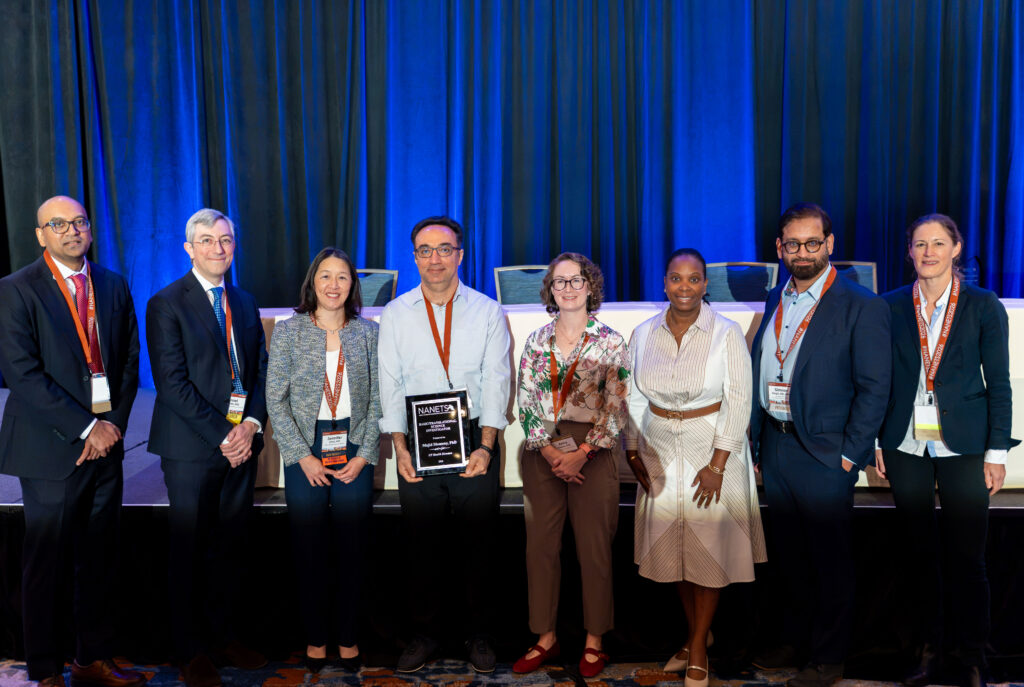
I recently returned from the 2026 North American Neuroendocrine Tumor Society (NANETS) Multidisciplinary NET Medical Symposium in Las Vegas, where clinicians, scientists, and industry representatives gathered to discuss advances in neuroendocrine cancer research and care.
These meetings are always an opportunity to learn about new research, reconnect with colleagues, and identify opportunities for collaboration. This year, I was particularly encouraged by the growing attention to aggressive neuroendocrine carcinomas, the evolution of radioligand therapy, and an important reminder that scientific progress must ultimately be measured by its impact on patients’ lives.
For a closer look at the science presented at NANETS, Udhayvir (Udhay) Singh Grewal, MD, has contributed a companion research update highlighting several important studies, including emerging therapies for neuroendocrine carcinomas, advances in radioligand therapy, and new therapeutic targets. In this article, I’d like to share a few additional highlights, along with my perspective on what these developments mean for patients and the future of neuroendocrine cancer research.
Growing Momentum in Neuroendocrine Carcinoma Research
One of my strongest impressions from NANETS was the growing attention to poorly differentiated neuroendocrine carcinomas (NECs). At least 15 research abstracts addressed extrapulmonary NECs, spanning emerging therapies, tumor biology, clinical outcomes, and patient experiences. The meeting also featured a keynote dedicated to extrapulmonary high-grade neuroendocrine neoplasms and several presentations on promising new therapeutic approaches.
For a group of cancers that has historically received relatively limited research attention, it was encouraging to see this breadth of activity. Platinum-based chemotherapy remains the standard initial treatment for most patients with advanced NEC, but responses are often short-lived, and effective options after progression remain limited.
This year, however, the discussion extended well beyond conventional chemotherapy. Researchers presented new approaches that target specific proteins on cancer cells, recruit the immune system to attack tumors, and investigate ways to overcome treatment resistance.
Dr. Grewal’s article describes encouraging early results with therapies targeting DLL3, a protein found on the surface of many NEC cells that researchers are using to develop treatments designed to recognize and attack these cancers. These emerging therapies could eventually offer new options for patients with NEC.
Another study that caught my attention investigated a very different strategy: using a virus to help attack cancer.
Researchers presented early findings from a phase 1 clinical trial evaluating SVV-001, an oncolytic virus, in combination with the immunotherapy drugs nivolumab and ipilimumab in patients with high-grade neuroendocrine neoplasms including poorly differentiated NECs and well-differentiated G3 NETs.
Oncolytic viruses can infect susceptible cancer cells and may also stimulate an immune response against the tumor. In this study, SVV-001 was injected directly into tumors. The early results offered encouraging signs of activity, although the study remains small and is primarily designed to evaluate safety and dosing.
This approach is still experimental, and much more research is needed to determine whether it can produce meaningful and lasting benefits. Nevertheless, I find it encouraging to see investigators pursuing treatment strategies that would have received relatively little attention in neuroendocrine cancer just a few years ago.
Investing in the Science Behind Better Treatments
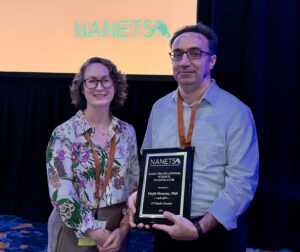
It was particularly meaningful to recognize Majid Momeny, PhD, as the 2026 recipient of the NANETS Basic/Translational Science Investigator (BTSI) Award. NETRF has funded this award in partnership with NANETS since 2016, supporting early-career scientists pursuing basic and translational research in neuroendocrine cancer.
Dr. Momeny’s research focuses on understanding how poorly differentiated NEC cells survive the stress caused by chemotherapy. His project investigates a protein called DUSP1 that may help cancer cells avoid the signals that would otherwise cause them to die. By blocking this protective mechanism, researchers hope to make existing chemotherapy more effective.
Although this work is still at an early laboratory stage, it represents an important part of the research process: identifying the biological mechanisms that allow tumors to resist treatment and using that knowledge to develop new strategies.
For NETRF, supporting this type of research is especially important. Clinical advances depend on foundational discoveries, and investing in early-career investigators helps ensure that talented scientists continue to enter and advance the neuroendocrine cancer field.
Read more about Dr. Momeny’s NETRF-supported research.
It was also rewarding to see two previous recipients of the NETRF-supported BTSI Award featured in a session highlighting emerging scientific discoveries. Suzann Duan, PhD (2025 awardee), presented research investigating menin-MLL inhibition as a potential therapeutic strategy for gastroenteropancreatic NETs, while Iacovos Michael, PhD (2023 awardee), discussed approaches to exploiting vulnerabilities in cancer cell survival to develop more effective treatments.
Seeing these investigators share their work alongside the latest clinical advances reinforces the importance of investing in early-stage research. These discoveries are helping build the scientific foundation for future therapeutic strategies, even as much work remains to translate them into treatments for patients.
Radioligand Therapy: More Options, but Also More Questions
Radioligand therapy was another major theme throughout the meeting.
Peptide receptor radionuclide therapy (PRRT) has already changed the treatment landscape for many patients with somatostatin receptor-positive, well-differentiated neuroendocrine tumors. Now, researchers are investigating how to build on that progress.
I particularly appreciated the presentation by Erik Mittra, MD, PhD, a member of NETRF’s Board of Scientific Advisors, which highlighted how rapidly the field is evolving. Beyond investigating new radiopharmaceuticals, clinical trials are addressing practical questions about when PRRT should be used, whether patients can benefit from additional courses of treatment (retreatment), and how radiation doses might be individualized.
For patients, these questions matter enormously.
A treatment’s effectiveness is only one part of the equation. We also need to understand which patients are most likely to benefit, how to sequence different therapies, and how to minimize both short- and long-term toxicity.
The emerging data on alpha-emitting radioligand therapies are encouraging, as Dr. Grewal discusses in his article. However, longer follow-up and comparative studies will be essential to determine how these newer agents should fit alongside established treatments.
Ultimately, the goal is not simply to develop more treatments. It is to develop better ways of selecting the right treatment for the right patient at the right time.
Measuring What Matters to Patients
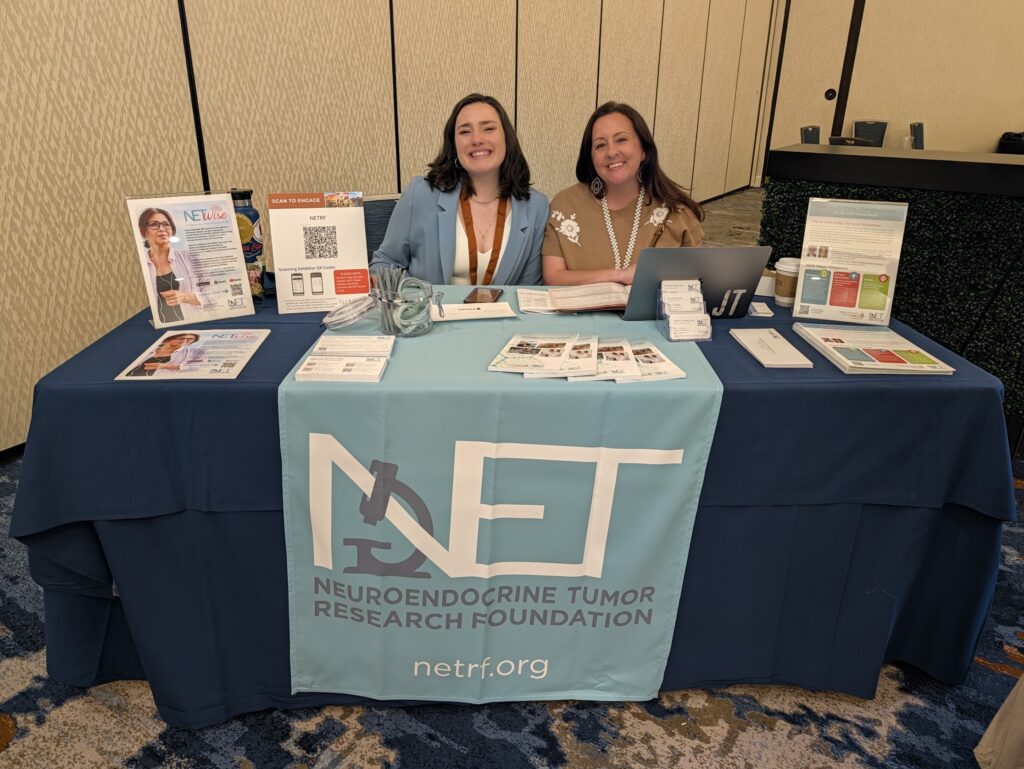
One presentation that particularly resonated with me was Claire Mulvey, MD’s, discussion of patient-reported outcomes and quality of life.
In cancer research, we often focus on outcomes such as tumor shrinkage, progression-free survival, and overall survival. These measures are essential, but they do not tell the whole story.
For people living with neuroendocrine cancer, treatment decisions can also affect fatigue, gastrointestinal symptoms, physical functioning, emotional well-being, and the ability to maintain everyday activities.
Dr. Mulvey highlighted the importance of systematically capturing patients’ experiences, both in clinical trials and in routine care. Patient-reported outcomes can reveal treatment effects and symptoms that might otherwise be overlooked.
This is particularly relevant for patients with well-differentiated NETs, who may live with their disease for many years while receiving multiple lines of treatment.
From my perspective, improving survival and improving quality of life should not be viewed as competing goals. Encouragingly, we’re hearing more discussions about incorporating patient-reported outcomes into clinical trials and identifying endpoints that better reflect what matters most to patients, including how they feel and function in their daily lives. Both survival and quality of life are essential to how we evaluate progress and define meaningful clinical benefit.
Moving Research Forward Through Collaboration
One of my favorite parts of meetings like NANETS is the opportunity to connect with the people working to advance neuroendocrine cancer research and care.
This year, we strengthened relationships with members of NETRF’s Board of Scientific Advisors and several of our funded researchers. We also had the opportunity to meet some of our travel award recipients for the 2026 NETRF Research Symposium, connect with new investigators, and spend time with colleagues we often interact with virtually throughout the year. These face-to-face conversations are invaluable for sharing ideas, learning about emerging research, and identifying opportunities for collaboration.
We also met with several industry representatives to discuss the importance of investing in neuroendocrine cancer research and better understanding the needs of this patient community.
An important part of these conversations is advocating for the patient voice in drug development. We want pharmaceutical and biotechnology companies to understand not only the science of neuroendocrine cancers, but also what it means to live with these diseases, including the challenges patients face and the limitations of current treatments.
That understanding can help inform which therapies companies choose to develop, how clinical trials are designed, and which outcomes are considered meaningful. For a group of cancers that has historically received relatively limited research investment, building this understanding and encouraging greater industry engagement are essential.
These interactions are an important part of NETRF’s role. Beyond funding research, we work to connect investigators, clinicians, industry, and the patient community to help accelerate progress.
Looking Ahead: Connecting Clinical Care and Discovery
NANETS also made me appreciate how important it is to bring together different parts of the neuroendocrine cancer research community.
NANETS is particularly valuable for its clinical focus, bringing together physicians and other healthcare professionals to discuss advances in diagnosis, treatment, and patient care.
Our own NETRF Research Symposium provides a complementary opportunity, with a stronger emphasis on basic and translational research. We bring together scientists investigating the underlying biology of neuroendocrine cancers, developing new research models, identifying therapeutic targets, and working to translate discoveries into future treatments.
Both perspectives are essential.
Clinical observations and unmet patient needs help inform the scientific questions researchers pursue. Laboratory discoveries, in turn, create opportunities for new treatments, diagnostic approaches, and clinical trials.
I returned from NANETS encouraged by the breadth of research underway and the growing opportunities to connect scientific discovery with clinical care. Meetings like NANETS and the NETRF Research Symposium serve different but complementary purposes, and both are essential to advancing the field.
What excites me most is not any single promising treatment or discovery, but the collective progress we’re making toward a better understanding of these diseases. By bringing together researchers, clinicians, industry, and patients, we can help ensure that scientific progress translates into meaningful improvements in the lives of people affected by neuroendocrine cancer.
_____________________________________________________________________
Read Dr. Udhay Singh Grewal’s research highlights from NANETS 2026.