
When chemotherapy stops working, patients and their care teams are left with few options. For people with poorly differentiated neuroendocrine carcinoma, that moment comes too often. This year’s NANETS Basic/Translational Science Investigator Award (BTSI), funded by NETRF, has been awarded to a project that aims to change that by finding out how these tumors survive treatment, and how to take that defense away.
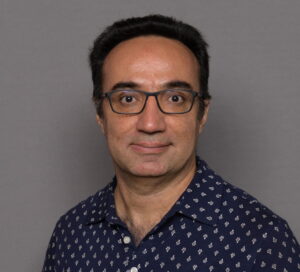
Meet the 2026 award recipient
Majid Momeny, PhD, has been named the 2026 recipient of the two-year, $100,000 grant made possible through NETRF’s support. Dr. Momeny is an instructor at The Brown Foundation Institute of Molecular Medicine within McGovern Medical School at UTHealth Houston.
He brings fifteen years of cancer-signaling research to his work in neuroendocrine cancer. His career has spanned Australia, Europe, and the United States, supported by competitive fellowships from the Finnish Cancer Institute, the Maud Kuistila Foundation, and the Turku University Foundation. He has authored more than 80 PubMed-indexed publications.
Since joining UTHealth Houston in 2022, Dr. Momeny has focused on how neuroendocrine tumor cells adapt to stress, presenting his findings at the AACR Annual Meeting and the NETRF Research Symposium. He is now building an independent research program dedicated to turning laboratory discoveries into new treatment strategies for patients.
The potential impact
Poorly differentiated neuroendocrine carcinomas are among the most aggressive forms of neuroendocrine cancer. They almost always return after standard chemotherapy, and for patients with advanced disease, median survival is approximately one year.
Dr. Momeny’s project, Targeting the Stress-Adaptation Phosphatase DUSP1 to Unmask JNK-Driven Apoptotic Vulnerabilities in Poorly Differentiated Neuroendocrine Carcinomas, looks at one reason these tumors are so hard to treat.
Chemotherapy puts cancer cells under heavy stress, which should trigger a signal (called JNK) that tells damaged cells to self-destruct. But these tumor cells rely on a protein called DUSP1 to quiet that signal, helping them withstand treatment and keep growing. Dr. Momeny’s early data suggest that blocking DUSP1 keeps the self-destruct signal active and makes tumor cells more sensitive to platinum chemotherapy, a common first-line treatment. If that holds up, it could offer a way to make existing treatment work better for patients facing this disease.
The research team
Dr. Momeny will be mentored by Ali Azhdarinia, PhD, Professor at McGovern Medical School at UTHealth Houston.
“He has consistently demonstrated exceptional scientific rigor, creativity, independence, and the qualities of an emerging leader in neuroendocrine carcinoma research,” said Dr. Azhdarinia. “I give him my highest recommendation and am fully committed to supporting his success.”
Daniel M. Halperin, MD, Associate Professor at Emory University, will serve as Clinical Co-Mentor, and Po-Hien Ear, PhD, Associate Professor at Emory University, will serve as Translational Co-Mentor.
Investing in the next generation of researchers
The BTSI Award supports early-career scientists in a fellowship or new faculty appointment who are committed to neuroendocrine cancer research. The NANETS Scientific Review & Research Committee sets the award criteria, reviews applications, and independently selects the recipient.
“NETRF is proud to collaborate with NANETS to support Dr. Momeny’s career development and research, which has the potential to transform the treatment of neuroendocrine carcinoma,” said Elyse Gellerman, CEO of NETRF.
Supporting promising scientists early in their careers helps build a research community that will keep investigating on behalf of patients for years to come.
______________________________________________________________________________________________________________________________________________________
Read more about some of the NETRF-funded projects that are accelerating the path to treatments and cures for neuroendocrine cancer.