
By Anna Greene, PhD, NETRF Chief Scientific Officer
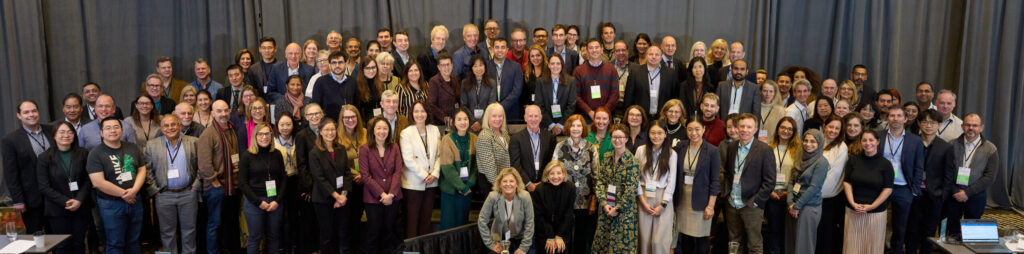
Each year, the Margie & Robert E. Petersen NETRF Research Symposium brings together leading scientists, clinicians, and NETRF leadership—including members of our Board of Scientific Advisors and Board of Directors—people who are united by a common goal: to improve the lives of everyone affected by neuroendocrine cancer.
This year’s meeting offered something truly special: clear momentum toward more personalized, more effective treatments. Across sessions, researchers shared breakthroughs in understanding how neuroendocrine cancers behave, how they interact with their surroundings, and how we might better detect and treat them. The symposium is where researchers share cutting-edge discoveries, but we want patients to know what’s happening, too. Here are a few of the most exciting updates.

1. Discovering New Weaknesses in NENs
One of the most exciting themes this year was the discovery of new vulnerabilities in neuroendocrine neoplasm (NEN) (including neuroendocrine tumor (NET) and neuroendocrine carcinoma (NEC)) cells, places where future treatments may be able to strike more precisely.
Researchers showed:
- Some NET cells can be driven to self-destruct by targeting the proteins that help them avoid cell death.
- Others become more vulnerable when scientists disrupt the way tumors manage stress or repair DNA.
- New surface markers on aggressive neuroendocrine cancers, such as NECs, may allow for highly targeted therapies that spare healthy tissue.
These discoveries bring us closer to treatments tailored to the biology of each patient’s tumor.
2. Mapping Tumors More Precisely Than Ever Before
Thanks to cutting-edge “omics” technologies, which are tools that look closely at genes, proteins, and cellular communication, researchers can now see that NENs are far more diverse than once believed.
This year’s presentations revealed:
- New molecular subtypes of lung and pancreatic NETs.
- Distinct tumor “neighborhoods” within the same patient, explaining why different lesions behave differently.
- Early genetic clues that may help spot pre-cancerous changes before tumors form.
By better understanding these hidden differences, clinicians may one day match every patient with the treatment most likely to work for their specific tumor.

3. The Tumor Microenvironment: A Key Piece of the Puzzle
NENs don’t grow alone—they are influenced by the immune system, surrounding tissues, nerves, and blood vessels. This year, several studies showed how this tumor microenvironment can help cancers grow, spread, or resist treatment.
Highlights included:
- Discoveries that certain immune cells become “silenced,” especially in more aggressive tumors.
- Evidence that blocking specific signals in the tumor’s environment may help prevent metastasis.
- New insight into mesenteric fibrosis, a buildup of scar tissue that can occur in some people with small-intestinal NETs.
Understanding this environment opens the door to therapies that target not just the tumor but the entire ecosystem that supports its survival.
4. More Precise Imaging & Targeted Radiation Therapies
Researchers also shared meaningful updates in radiopharmaceuticals, which use targeted radioactive compounds to improve imaging and treatment.
Promising progress was presented in:
- New imaging tools that may outperform current SSTR-based scans.
- Radiotracers designed for tumors that don’t express somatostatin receptors.
- Improved radioactive therapies that deliver stronger, more targeted radiation with fewer side effects.
These innovations point toward a future where imaging and therapy work hand-in-hand to detect tumors earlier and treat them more effectively.
5. Building Better Models to Speed Up Discovery
Throughout the symposium, scientists emphasized the power of new model systems, organoids, spatial mapping platforms, and genetically engineered mice that more closely mirror NEN biology than ever before.
These models help researchers:
- Test drugs more accurately
- Study how tumors evolve over time
- Understand hormone secretion
- Explore why some tumors progress to higher grades
With these tools, the pace of discovery is accelerating.
6. A Future of More Personalized Care
While neuroendocrine cancers remain complex and varied diseases, the symposium highlighted steady progress toward care that can better account for differences between patients and their tumors.
By combining molecular profiling, improved imaging, insights into the tumor microenvironment, and powerful new research models, scientists are redefining what’s possible for neuroendocrine cancer care.
At NETRF, we are proud to support the researchers pushing these innovations forward, and we are deeply grateful to our community that inspires every step of this work.
Watch complete symposium session video recordings and browse the symposium photo gallery.