
Tijana Jovanovic-Talisman, PhD, is an Associate Professor at Beckman Research Institute at City of Hope and a 2025 NETRF Pilot Award grantee for her research to uncover early detection tools for neuroendocrine cancer.
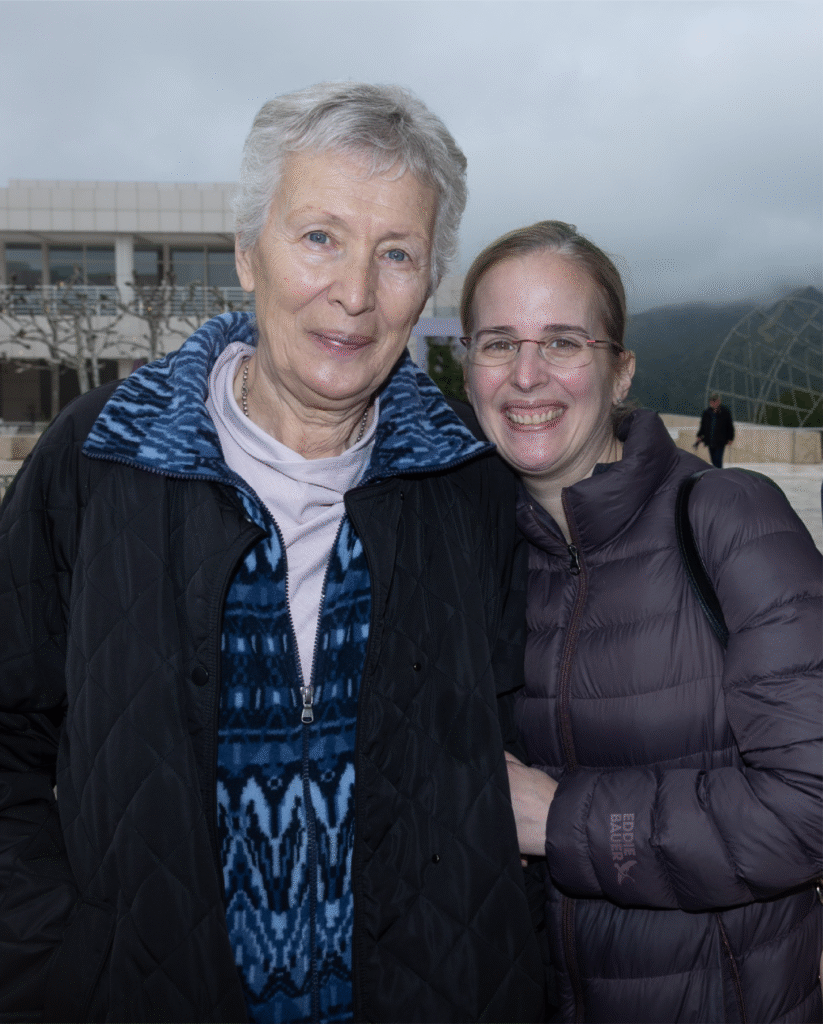
She also has a very close connection to the disease. Tijana was first introduced to neuroendocrine cancer research over ten years ago, and, remarkably, her mother Branislava Jovanovic was diagnosed with neuroendocrine cancer six years later.
Her mother’s experience with neuroendocrine cancer, which was caught at an early stage, has been a driving force in Tijana’s motivation to improve outcomes for all neuroendocrine cancer patients.
We recently spoke to her about her research, her mother’s neuroendocrine cancer journey, and what NETRF’s support means to her.
Can you share a bit about yourself? Where are you from and what has your professional journey been?
I’m originally from Belgrade, the capital of Serbia, where I completed my undergraduate degree. I trained at Mayo Clinic, then completed my graduate degree at Columbia University, my first postdoc at Rockefeller University, and my second postdoc at the National Institutes of Health. After two years at the University of Hawaii in my first Principal Investigator position, I moved to City of Hope in Los Angeles.
How did you get involved with neuroendocrine cancer research?
I have an incredible collaborator, Dr. Gagandeep Singh, a pancreatic, neuroendocrine, and liver cancer surgeon at City of Hope Phoenix, who is passionate about research. He introduced me to neuroendocrine cancers about ten years ago and we pursued research projects together. From the start, he made sure to connect me and my lab with patients who shared their journeys with us. That changed everything. When you see a person behind the research, it becomes so much more real. Dr. Singh is a truly extraordinary surgeon, doctor, and researcher, and his passion was instrumental in drawing me into this field.
Can you tell us about your personal connection to neuroendocrine cancer?
About three and a half years ago, my mother was diagnosed with neuroendocrine cancer of the small intestine. It was an incidental discovery; doctors weren’t initially looking for it. I was very concerned while we were waiting for biopsy results, honestly afraid it might be adenocarcinoma, which may have meant a much worse prognosis.
I called Dr. Singh right away, described what we knew, and he immediately said, ‘This is neuroendocrine.’ He was absolutely right. When the pathology came back, the tumor had been successfully excised, and it had a low mitotic index, very slow progressing, which was wonderful news. My mother has had two additional surgeries since, but she is doing really well. She was even able to travel and visit us recently, three years after her diagnosis, which was amazing.
Her experience profoundly changed my perspective. She was diagnosed early, and that made all the difference. She has more time with us. I want every patient to have the opportunity to be diagnosed early. That is why I became so focused on early detection.
As a scientist who was already familiar with neuroendocrine cancer, how did you help your mother navigate her diagnosis and treatment?
Like anyone, I turned to the internet, but as a scientist, I’m very careful about where I look. I don’t go to ChatGPT. I go to sources I trust. NETRF’s website was one of those trusted sources, and I found it genuinely helpful, both for clinical information and for practical guidance on nutrition, which has been an ongoing adjustment for my mother. So I actually engaged with NETRF first as a caregiver for my mother, and later as a researcher. That experience gave me a real appreciation for what NETRF does for patients and families.
Is there anything you wish the public understood better about the disease?
My mother had never heard of neuroendocrine cancer when I told her about her diagnosis, and that needs to change. Greater awareness among the general population is so important, because the symptoms are often silent or easy to dismiss. If patients don’t know this disease is a possibility, they may not advocate for themselves. And even when they do, doctors sometimes don’t pursue it if they don’t see something obvious. Patients today often need to be their own advocates. The message I’d want people to hear is: if something feels wrong, don’t ignore it. Get it checked out. Persist.
Can you describe your research and how it could impact detection and treatment of neuroendocrine cancer?
My lab has been working in the extracellular vesicle field for some time. The best way I can describe it: imagine a post office full of packages. My job is to find the specific packages whose return address is a cancer cell. These packages, known as extracellular vesicles, circulate in the blood, and they carry molecular information that reflects their cell of origin and what’s happening inside that cell. They’re exciting as a biomarker source because their contents are protected, like a well-sealed package, and they respond very rapidly to cellular changes. That means they can signal that something is wrong very quickly.
Using advanced microscopy techniques, we can detect even the rarest of these cancer-derived vesicles in a blood sample. My NETRF-funded research is focused on identifying markers that indicate a vesicle originated from a neuroendocrine tumor, and ultimately developing a non-invasive blood test for early detection and monitoring. This is a pilot study with a small group of patients, but if the results are promising, we hope to expand it significantly. And because extracellular vesicles are being studied across many cancer types and even neurodegenerative diseases, this work has the potential for much broader impact.
What is your hope for the future of neuroendocrine cancer research?
I think most people in this field share the same wish list: effective early detection, reliable monitoring tools, and better therapeutic options for patients who are diagnosed at a later stage, when surgical resection is difficult or impossible. Those patients need better medications that can target the disease. But beyond detection and treatment, I also hope we can improve the recovery experience for patients. I watched my mother spend a couple of years gradually getting back to a place where she felt comfortable traveling, eating more freely, and living close to the way she did before. I would love to see research that makes that period easier for patients, not just surviving, but recovering well.
What does NETRF’s support mean to you?
It means a great deal, and for very personal reasons. I first came to NETRF as a caregiver searching for trustworthy information when my mother was diagnosed. What I found was an organization that genuinely puts patients at the center of everything it does. When this grant opportunity came along, I knew I wanted to be part of that.
This project is deeply personal. My husband, who is a scientific writer at City of Hope, sat down with me and we worked on this grant together as a family, because it mattered to us on every level. It’s not just a research project. It’s something we have a real relationship with. I’m honored to be part of NETRF, and I’m grateful that even from Serbia, my mother was able to find support and information through your website during her own journey. She’s very proud of this work, and I think she understands, better than anyone, why early detection matters.
___________________________________________________________________
Read more about Dr. Jovanovic-Talisman’s Pilot-award winning project: Characterization of extracellular vesicles for early detection of neuroendocrine tumors