
Blog
First PRRT Approved by U.S. FDA
New treatment for GI and pancreatic NETs The U.S. Food and Drug Administration (FDA) has approved Peptide Receptor Radionuclide Therapy (PRRT) with a new radiopharmaceutical for

New treatment for GI and pancreatic NETs The U.S. Food and Drug Administration (FDA) has approved Peptide Receptor Radionuclide Therapy (PRRT) with a new radiopharmaceutical for
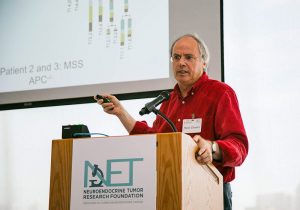
World renown laboratory in the Netherlands to grown min-organs in Petri dishes to speed up NET drug testing.

Even those who did not know her were inspired by the stories of Meg’s positive, generous spirit, her sense of humor, and ability to squeeze so much life into her 31+years. Nurse Meg took care of us all and is forever in our hearts—forever running alongside encouraging us to dream bigger and live stronger—and find and inspire laughter and joy each day.

Much about a carcinoid cancer cell remains a mystery. For that reason, NETRF funds research to understand how and why a neuroendocrine cancer cell comes

NETRF in collaboration with NANETS awarded the 2017 Basic Translational Science Investigator grant to Brian R. Untch, M.D., at Memorial Sloan Kettering Cancer Center for his proposal, “Enhancing Peptide Receptor Radionuclide Therapy in Well-Differentiated Pancreatic Neuroendocrine Tumors.”

Peptide Receptor Radionuclide Therapy (PRRT) treats neuroendocrine tumors (NETs) by converting a cancer cell’s unique characteristics into a welcome mat for a Trojan Horse packed with cancer-killing radiation.

There is a critical need to develop improved diagnostic tools for non-invasive, early detection of NETs in a broader range of patients. New grant-funded research will work towards this goal.

He is a pioneer whose work has helped extend the horizon of cancer care, creating a new category of individualized immunotherapy. Carl June, MD, has conducted 25 years of scientific research to advance CAR T-cell therapy. And all that knowledge is now helping to tackle NETs.

It is common to feel sad, discouraged, or moody after a cancer diagnosis. You may be facing new limits on what you can do and feel anxious about treatment outcomes and the future. It may be hard to adapt to a new reality and to cope with the changes that come with the diagnosis and the demands of treatment.
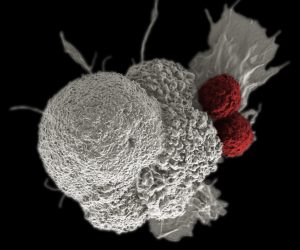
Imagine being able to program your immune system to launch one million minuscule heat-seeking missiles, whose sole purpose is to find and kill cancer cells. This is the basic premise behind an emerging form of immunotherapy, called CAR T-cell therapy, which genetically modifies an individual’s immune system to find, bind to, and kill cancer cells.